
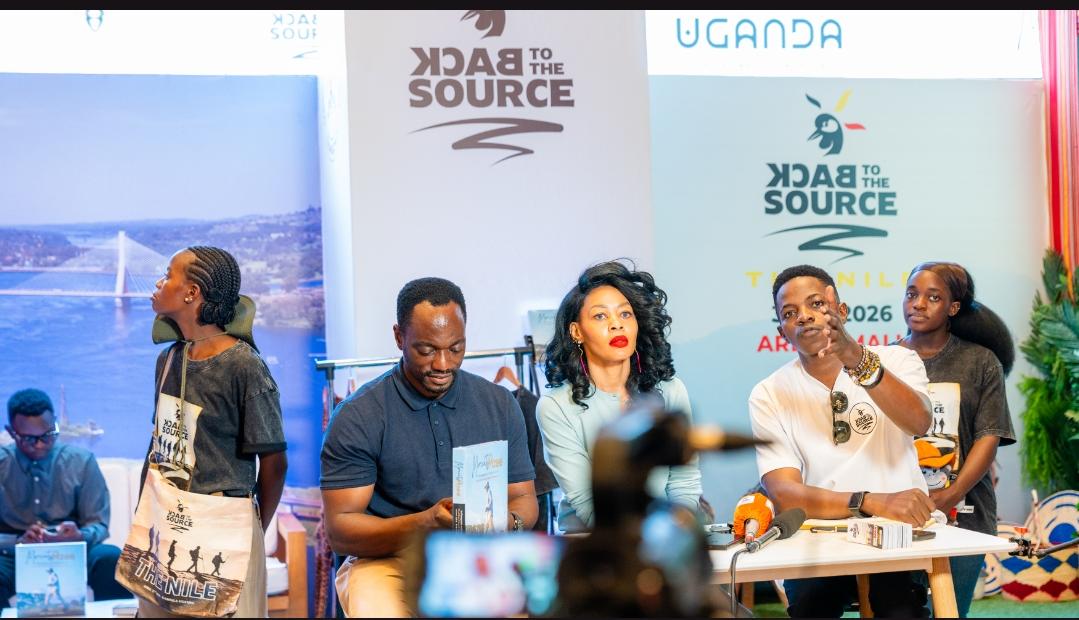
Uganda is sharpening its focus on the Chinese tourism market, with creatives, diplomats, and marketers joining forces to reposition the country’s narrative through storytelling, film, and cultural products.
At a press briefing anchored by tourism advocate Derrick Ssenyonyi alongside Ambassador Judith Nsababera and creative Abubakar Mwesigwa, the message was clear: Uganda must “go back to the source” by owning and exporting its story to the world, particularly to China.
The engagement, held on the sidelines of the Pearl of Africa Tourism Expo 2026, focused on bridging the gap between Uganda and China by enabling Ugandans to tap into Chinese markets while simultaneously attracting Chinese tourists to Uganda.
Ssenyonyi said the initiative is aimed at ensuring clarity of message both locally and internationally.
“We are here to take it back to the source and make sure the message is understood in Uganda and in China so people can see how to tap into the China market and how we can attract Chinese visitors here,” he said.
Central to the initiative is storytelling — not merely creating content, but intentionally marketing and distributing it globally.
“Creation alone is not enough. Marketing, promotion, and standing by your story is part of the creator economy,” he emphasized.
Ambassador Nsababera highlighted the scale of the Chinese outbound tourism market, revealing that Chinese travellers made approximately 149 million overseas trips in 2024, spending an estimated $790 billion globally.
“This is a huge opportunity for Uganda,” she said. “We are not only looking at trade but also at how Chinese tourists can come and experience our country.”
She challenged perceptions that language barriers remain a major obstacle, noting that Chinese tourists already travel extensively to countries where Chinese is not spoken.
“The issue is not language. Tour operators must package their products in Chinese — brochures, itineraries, and experiences — so visitors understand what Uganda offers even before they arrive,” she explained.
She added that translation technology could help bridge communication gaps for tourists once they arrive in Uganda.
A major highlight of the campaign is the Back to the Source documentary, which organizers say has already reached more than 73 million viewers in China.
The project was designed to humanize Uganda’s tourism story through personal experiences rather than relying solely on traditional destination marketing.
“We wanted to tell a human story — something relatable,” Nsababera said. “After its success in China, we brought it back home so Ugandans themselves could connect with it.”
The documentary has since been screened in communities such as Katanga, targeting audiences that may not ordinarily access high-end premiere venues.
“This was about making sure the message lands deeply and clearly within communities,” she added.
Organizers revealed plans to take the film to more regions across Uganda and internationally, including the United States, Europe, and Asia.
The briefing also addressed what stakeholders described as a major gap within Uganda’s tourism value chain — limited spending opportunities for tourists.
“When tourists come, they pay for visas, hotels, food and transport — they spend money,” Nsababera said. “But studies show they leave Uganda with up to 60 percent of their budget unspent because there aren’t enough products.”
Stakeholders said the gap presents an opportunity for creatives and entrepreneurs to develop cultural experiences, merchandise, and tourism products that can increase visitor spending.
Photographer and author Abu Mwesigwa used the platform to introduce his book, Moments with M7, a visual storytelling project documenting Uganda’s President through rare imagery and personal reflections.
“This book gives people rare moments in pictures and stories,” he said. “It’s about Africans taking the lead in telling their own stories.”
Mwesigwa argued that Uganda’s story has historically been shaped by outsiders, particularly during periods of instability when foreign filmmakers and researchers dominated documentation efforts.
“When they left, they took our records with them. Much of our history is archived abroad,” he said.
He stressed that documenting Uganda’s identity and heritage is both a creative and historical responsibility.
“It would be unfortunate for someone from outside to come and tell us about our own Lake Victoria. We must document our heritage ourselves,” he said.
The book, priced at UGX350,000 (approximately USD100), is being positioned as a premium cultural product that tourists can purchase as part of broader efforts to increase tourism-related spending.
The panel concluded with a call for Uganda’s young creatives to take greater ownership of the country’s narrative and seize opportunities within the global creator economy.
“If you’re a young person watching this, take the lead,” Ssenyonyi urged. “Tell our stories, document our experiences, and share them with the world.”
As Uganda seeks stronger visibility in global tourism markets, initiatives such as Back to the Source are signalling a shift from passive destination promotion toward intentional storytelling, cultural ownership, and strategic engagement with high-value tourism markets such as China.
